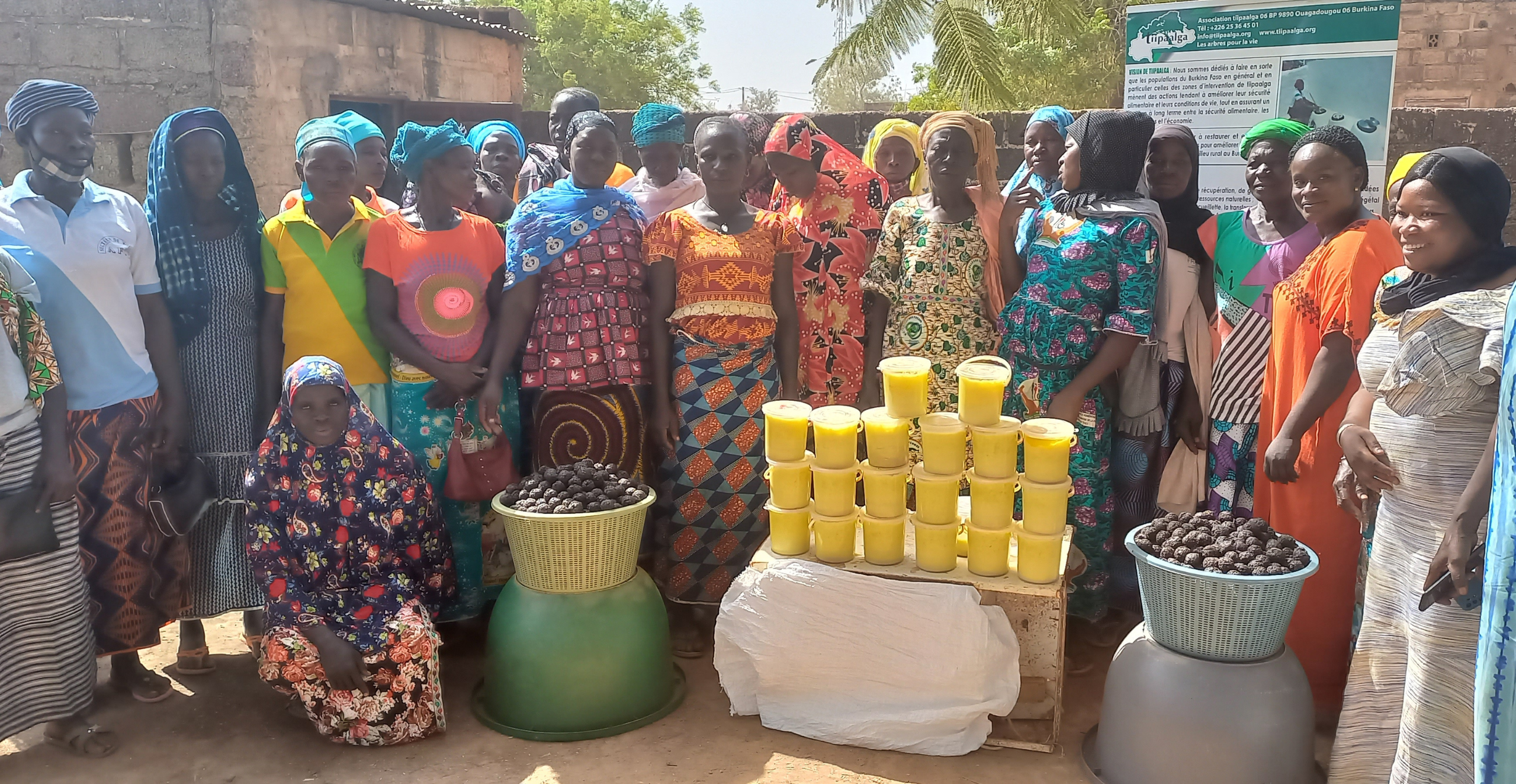
For centuries, Soumbala has played an important role in the culture and cuisine of the western Sahel. Made from the fermented seeds of African locust bean tree – the néré tree in French (Parkia biglobosa) – Soumbala is widely used as a condiment in soups, stews and other dishes, as well as in spiritual rituals.
Referred to by some as ‘African mustard’, Soumbala is both flavourful and extremely nutritious. It helps improve gut health and digestion, and is rich in protein, iron and essential amino acids. And behind every spoonful of Soumbala lies the knowledge, skill and hard work of women producers.
Products from native trees
In the Sahel, profits from the sale of agricultural products generally go to men. But sales of non-timber forest products (NTFPs), like Soumbala, are more likely to benefit women, who play a dominant role in their harvesting, food processing and sales. Increasing women’s access to markets for such products thus offers an important path to women’s economic empowerment.
Communities Regreen the Sahel is working with women’s producer cooperatives across Niger, Burkina Faso and Senegal to build more inclusive value chains for NTFPs and strengthen women’s access to markets. At the core of the programme is Farmer Managed Natural Regeneration (FMNR), a proven method for reversing land degradation in the Sahel. In contrast to many other regreening approaches, FMNR encourages the regrowth and protection of native trees, like the African locust bean tree. Regreening through FMNR enables communities to increase the harvest of crops and non-timber forest products (NTFPs), like Soumbala.
Woman at a market in Burkina Faso showing her Soumbala
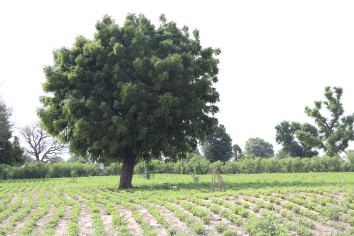
Soumbala is made out of the fruit of the Néré tree
Effective marketing
With support from Communities Regreen the Sahel, women are organising themselves into producer cooperatives and making the most of NTFPs. We strengthen their business and leadership skills, and support them with the tools and knowledge to process, package and successfully sell their NTFPs.
In the case of Soumbala, the fermented paste can be shaped into balls, packaged in jars, or made into powder. Our research into the market potential for NTFPs – including information about demand, preferred packaging, pricing and the like – helps women producers develop effective marketing strategies. We are connecting women producers with buyers, facilitating their access to national and regional markets. We also engage with local authorities, working with them to improve market places and structures, and optimise the balance between supply and demand.
For women in the Sahel, improved access to markets and a stronger value chain for Soumbala, as well as other NTFPs, translates into stronger, more resilient livelihoods. Through the Communities Regreen the Sahel programme, we aim to double the income of 5,000 women food producers in Niger, Burkina Faso and Senegal.
Money doesn’t grow on trees, as the saying goes. But growing trees sure helps grow the money.