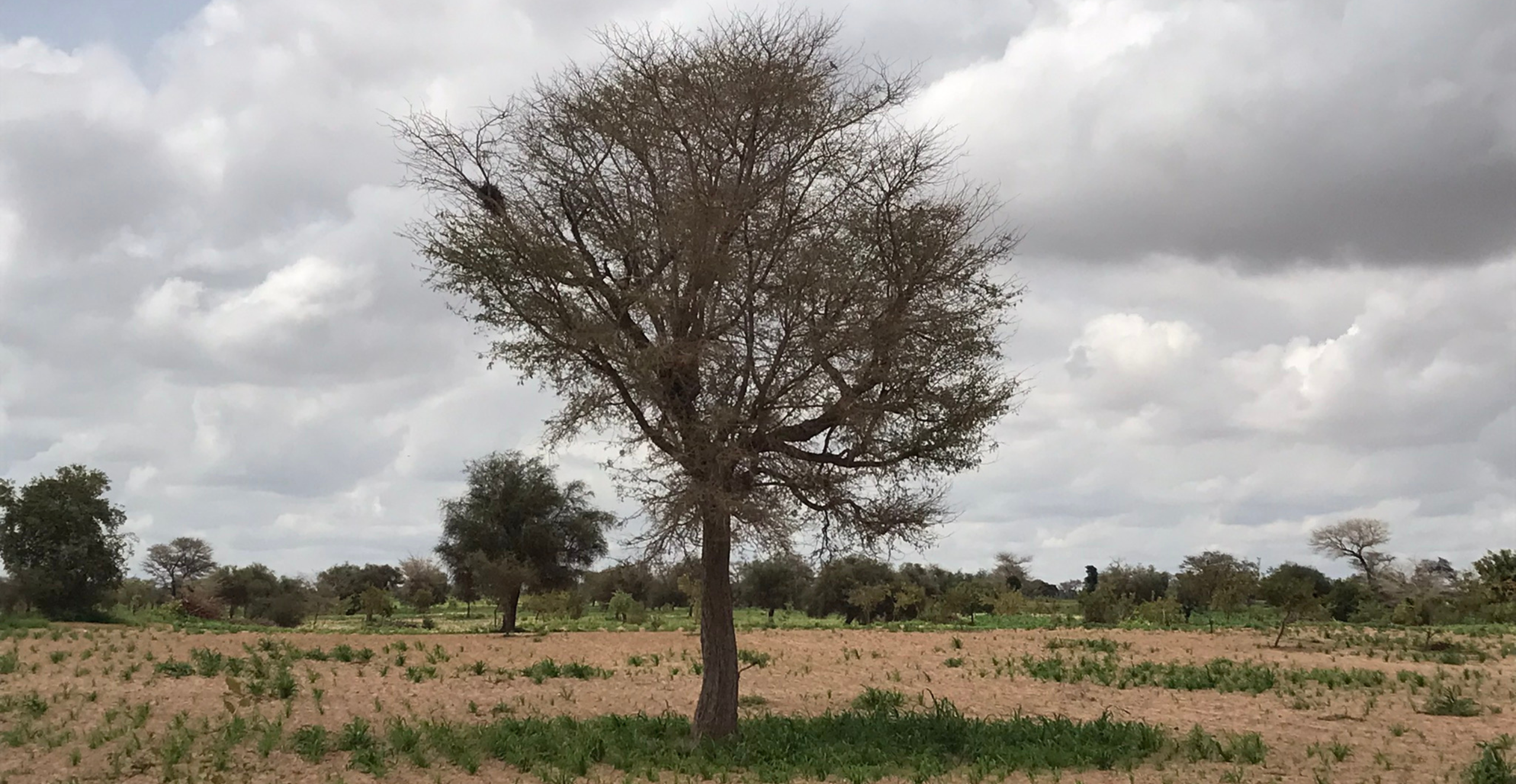
In Latin, it’s Faidherbia albida. In Niger, it’s the gao tree. In Senegal, it’s called the kadd. In Burkina Faso, it’s known as the balanzan. The name of the tree may vary. But everywhere cross the Sahel, one thing is true: Faidherbia albida is a trusted friend to farmers.
Native to the region, Faidherbia albida is the only tree to lose its leaves at the onset of the rainy season and to regreen again as the rain subsides. Thanks to its deep taproot – which can grow as much as 15 meters below the surface – Faidherbia albida doesn’t compete with other plants for water. Its roots, which help fix nitrogen, contribute to the health and quality of the soil, making it a vital part of regreening efforts.
Restoring the Sahel’s ecosystems
In the Sahel’s semi-arid drylands, Faidherbia albida has long been a fixture of the landscape. Yet due to colonialism and modern agricultural customs, the transfer of Indigenous knowledge about the tree has been fragmented. Today many farmers are unaware of the importance of such trees to the health of the Sahel’s fragile ecosystem, believing it better to clear such trees from their land.
Fortunately, an Indigenous approach to ecosystem restoration – Farmer Managed Natural Regeneration – is revived across the Sahel. Through the Communities Regreen the Sahel programme, more and more farmers are learning about the value and importance of protecting native trees like Faidherbia albida on their lands. Through training and technical support, they are acquiring the skills to resurrect and nurture dormant trees, and effectively prune and protect saplings.
Inclusive land governance is key to the approach. Village Committees bring farmers and pastoralists together to make agreements about land and tree use. In this way, communities are successfully and sustainably restoring the region’s endemic forest landscapes, including Faidherbia albida.
Pruning a young Faidherbia Albida tree. The waste can be used as fodder for cattle
Farmer next to a Faidherbia Albida tree on his field. The shade of the tree catalyses the growth of other crops
A valuable resource
Nurturing and protecting Faidherbia albida provides countless benefits, both for the Sahel’s ecosystems and its communities. The tree’s bark and roots have medicinal properties. Its seeds can be used to make oil. Its leaves provide a valuable source of organic fertilizer for crops and nutritious fodder for animals. In the dry season, Faidherbia albida’s expansive crown offers much-needed shade. And at the end of the rainy season, its flowers provide a key source of pollen for bees, making it valuable for beekeeping.
As if that weren’t enough, Faidherbia albida helps farmers increase their agricultural yields. By nurturing Faidherbia albida on their lands, some farmers have seen yields of millet and peanut more than triple, providing a crucial boost to their food security and livelihoods.
Thanks to the Communities Regreen the Sahel programme, some 90,000 farmers have been trained to regenerate the Sahel’s native trees. On more than 140,000 hectares across Niger, Burkina Faso and Senegal, farmers are again enjoying the generosity of their old friend, Faidherbia albida.