Local farmers in the Sahel are at the forefront of sweeping change. They are coming together to halt land degradation and desertification, and restore healthy ecosystems. We aim to ensure that Farmer Managed Natural Regeneration – and community-led ecosystem restoration in general – receives the attention and support it deserves, including by engaging in international spaces like the United Nations Convention to Combat Desertification (UNCCD).
Locally-led solutions
For communities in the Sahel, whose livelihoods depend on the health of their land, decisions taken at the UNCCD are extremely important. The convention brings together governments, experts and civil society organisations to define priorities, share solutions and mobilise funding for land restoration.
Unfortunately, many polices and funding mechanisms to combat desertification focus on technical solutions – which are often top-down, complex and costly. Yet more than a decade of results from the Communities Regreen the Sahel programme makes clear that locally led solutions like Farmer Managed Natural Regeneration are a highly effective, sustainable solution that offer an array of environmental, social and economic benefits.
Mobilising support at UNCCD COP16
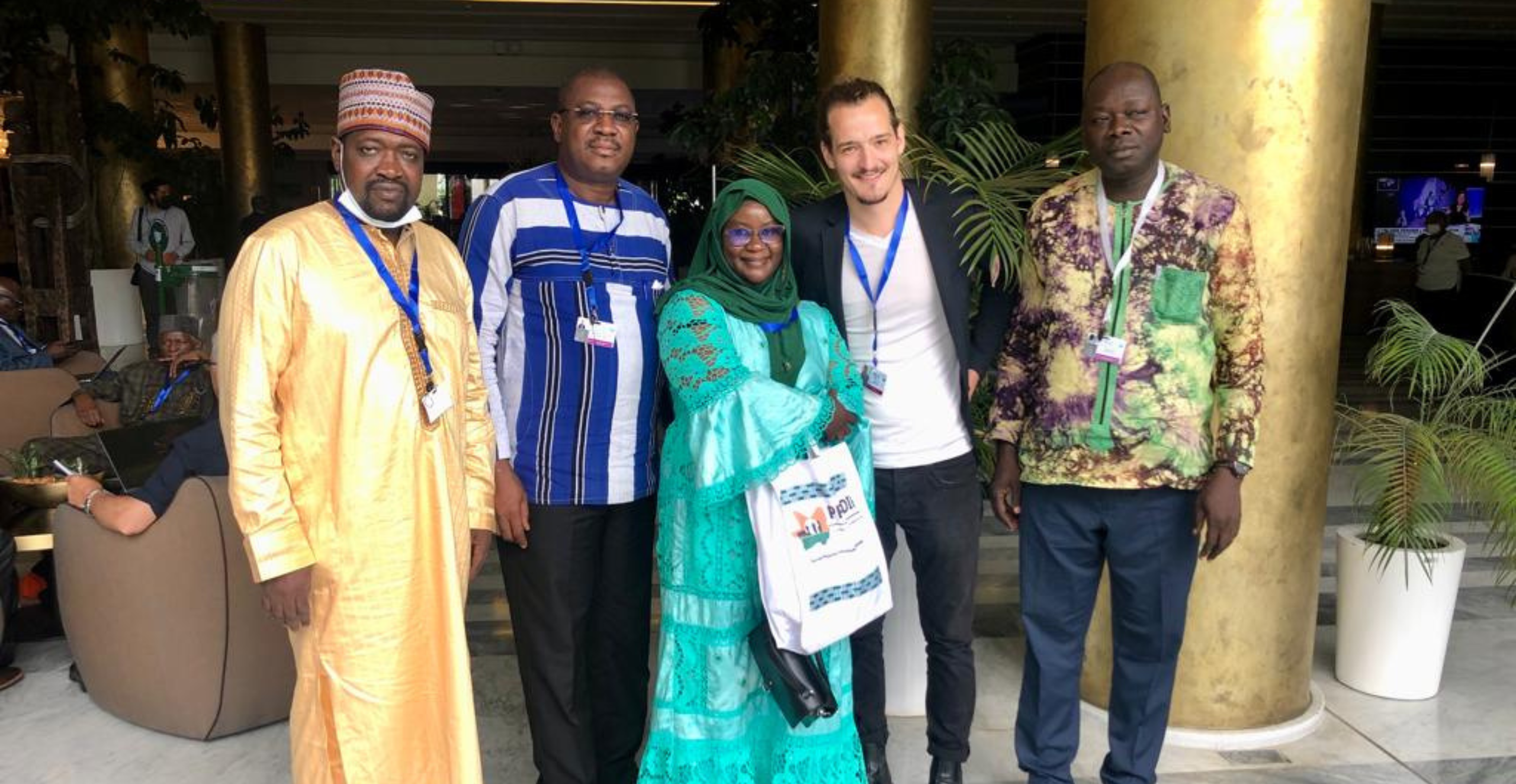
Widespread support is needed to stimulate the massive scaling up of FMNR throughout the Sahel. We participate in the UNCCD’s annual conference to urge decision-makers to adopt policies that enable FMNR and ensure that funding flows to locally-led regreening efforts.
In 2024, at the UNCCD COP16 in Saudi Arabia, we met with policymakers, and organised and participated in side events to showcase the results of FMNR and the Communities Regreen the Sahel programme. At one side event, we joined our allies in the Drynet network to present ten detailed recommendations for the UNCCCD. Among other things, we called for robust implementation of the UNCCD’s landmark decision recognising informal, collective and customary land tenure. Strengthening tenure security for local communities, especially women, youth and pastoralists, is a critical piece of the regreening puzzle. People are more likely to invest in the long-term effort of regreening when they know they will reap the benefits.
Members of the CRS consortium from Burkina Faso present at UNCCD COP15 in Abidjan, Cote d_Ivoire
Both ENDS representative makes the CSO statement at UNCCD COP15 in Abidjan
Movement building
Our participation in the UNCCD also provides an important opportunity to link up with other actors – local, national and international organisations and policymakers – who share our vision of locally led ecosystem restoration. We exchange experiences and lessons learned from the Communities Regreen the Sahel programme, and explore opportunities for collaboration to strengthen impact.
Our efforts at the UNCCD conferences have helped to open doors and forge new relationships, including with national-level policymakers in Sahel countries. Back home, when the bags are unpacked, we strengthen these connections and work to ensure that UNCCD decisions become the law of the land. We advocate for national policies in Niger, Burkina Faso and Senegal in line with the UNCCD’s national Land Degradation Neutrality targets.