In the Sahel, where land degradation, conflict and climate stress intersect, land governance is a critical issue. Insecure land tenure, conflicting land-use laws, and lack of recognition for community land use practices can undermine local restoration efforts. Even when farmers successfully regenerate trees and restore their land, their progress is fragile without supportive policies.
Policy support for FMNR
Communities Regreen the Sahel aims to create a policy environment conducive for Farmer Managed Natural Regeneration. We support communities in Niger, Burkina Faso and Senegal not only to restore their land, but to secure their rights to it. People are more likely to invest in the longer-term effort of regreening if they know they will reap the benefits. Respect for land rights – including women’s land rights – is essential to the sustainability of community-led regreening efforts, as well as food security and peace.
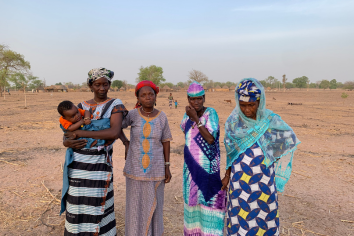
Women on their field in Senegal
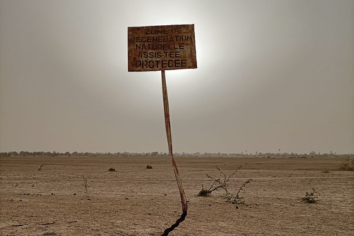
Sign marking a new FMNR field, which is still dry at the start of the project
We are bringing our experience and scientific evidence of the value of community-led natural regeneration to key actors at all levels, including governments, civil society and international institutions. We advocate for recognition of FMNR and agroecology in local and national development policies and plans, and urge governments and donors to stimulate widespread community-led regreening by increasing funding for such efforts. Through action-oriented research, we develop analyses and recommendations. We focus attention on legislative and regulatory obstacles to FMNR, including insecure land and tenure rights, and urge decision-makers to address them.
Evidence-based advocacy
We also contribute to relevant regional and international policy dialogues to promote FMNR and agroecological approaches as effective, locally-driven approaches for mitigating and adapting to climate change, and combatting desertification. We share the success of the Communities Regreen the Sahel programme and our recommendations in key decision-making spaces, including UN conferences on climate (UNFCCC) and desertification (UNCCD).
By bridging grassroots experience with policymaking, we are succeeding in putting FMNR on national and global agendas. Our work has contributed to improved policies, including a presidential decree, adopted in Niger in 2020, that promotes FMNR. Crucially, the decree addressed the problematic issue of tree tenure – an obstacle to restoration efforts in many places in the Sahel – by clearly awarding farmers the rights to trees they have planted or maintained on their farms.
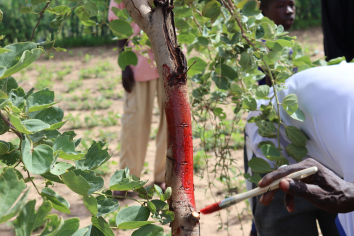
Marking a tree
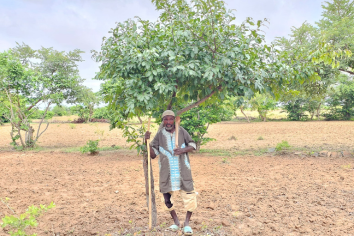
Farmer on his FMNR field in Burkina Faso
Local access to finance
Ensuring that communities can access the financial resources needed to restore their land is equally essential. Despite FMNR being a low-cost, high-impact approach, many communities and local organisations lack access to predictable and flexible finance to scale up their efforts. We advocate for inclusive funding mechanisms – both national and international – that are tailored to the realities of local communities and that channel resources directly to local actors. This includes promoting small grants, simplified and inclusive funding procedures, and investment in long-term landscape restoration rather than short project cycles. By urging governments, donors and climate funds to prioritise FMNR and other locally-led restoration and adaptation approaches in their financing strategies, we help unlock the resources communities need to sustain and expand their regreening work.
Related stories
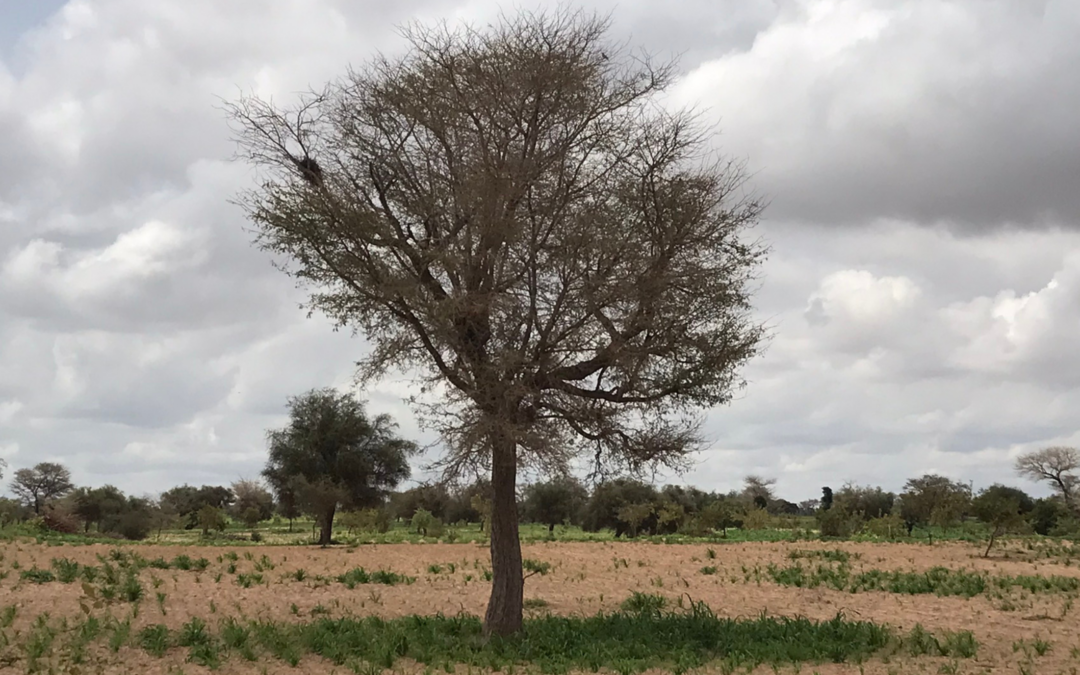
Faidherbia albida: a friend to the Sahel’s farmers
In Latin, it’s Faidherbia albida. In Niger, it’s the gao tree. In Senegal, it’s called the kadd. In Burkina Faso, it’s known as the balanzan. The name of the tree may vary. But everywhere cross the Sahel, one thing is true: Faidherbia albida is a trusted friend to...
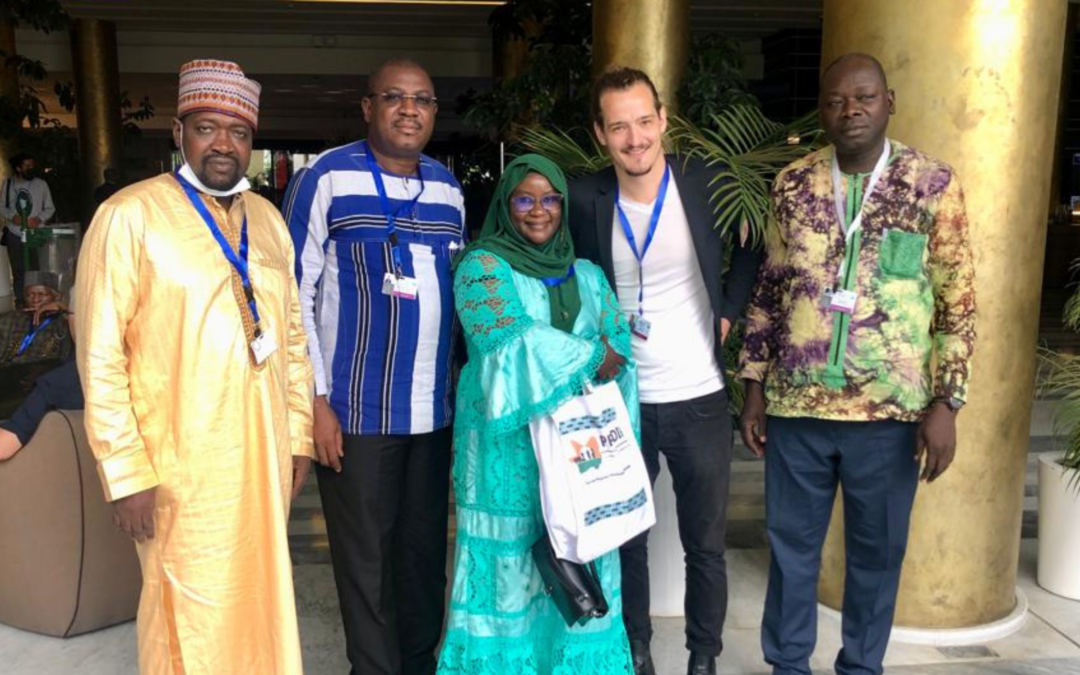
Local regreening, global support: Advocacy at the UNCCD
Local farmers in the Sahel are at the forefront of sweeping change. They are coming together to halt land degradation and desertification, and restore healthy ecosystems. We aim to ensure that Farmer Managed Natural Regeneration – and community-led ecosystem...